
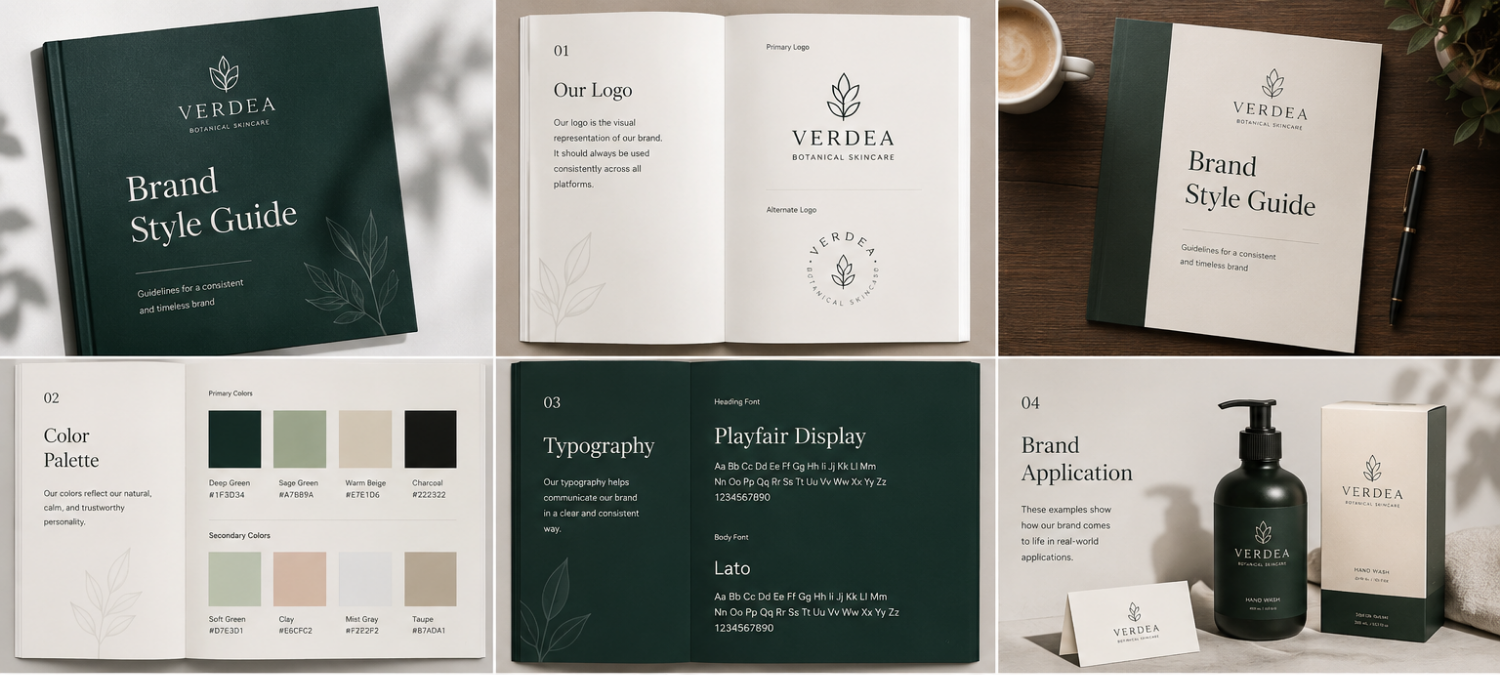
Building a successful brand takes more than a great logo. To create a memorable and professional business, you need consistency across every customer touchpoint. That’s where a brand style guide comes in.Whether you’re designing a website, creating social media content, printing business cards, or launching marketing campaigns, a brand style guide ensures your business always looks and feels the same.
In this guide, you’ll learn what a brand style guide is, why it matters, and how to create one for your small business.
What Is a Brand Style Guide?
A brand style guide (also called brand guidelines) is a document that outlines the visual and communication standards for your business.
It helps everyone from business owners to designers and marketers, present your brand consistently.
A typical brand style guide includes:
- Logo usage
- Brand colors
- Typography
- Photography style
- Graphic elements
- Brand voice
- Social media guidelines
Think of it as the blueprint for your brand identity.
Why Is a Brand Style Guide Important?
Without clear guidelines, your branding can become inconsistent. Different fonts, colors, or logo versions may confuse customers and weaken your brand.
A brand style guide helps you:
1. Build Brand Recognition
People remember brands that look consistent. When your visuals stay the same across every platform, customers begin to recognize your business instantly.
2. Increase Customer Trust
Professional and consistent branding makes your business appear reliable and established.
3. Save Time
Instead of deciding which colors or fonts to use every time you create content, your style guide provides ready-made standards.
4. Improve Team Collaboration
If multiple people create content for your business, everyone can follow the same guidelines and maintain a consistent brand image.
Step 1: Define Your Brand Identity
Before choosing colors or fonts, define what your business stands for.
Ask yourself:
- What is my mission?
- What are my core values?
- Who is my target audience?
- What makes my business unique?
- How do I want customers to feel?
Your answers will shape every design decision.
Step 2: Create Logo Guidelines
Your logo is one of the most recognizable parts of your brand.
Include:
- Primary logo
- Secondary logo
- Icon version
- Logo spacing rules
- Minimum logo size
- Correct and incorrect logo usage
- Approved background colors
This prevents inconsistent logo placement across marketing materials.
Step 3: Choose Your Brand Colors
Color plays a major role in brand recognition.
Select:
- Primary colors
- Secondary colors
- Accent colors
Include:
- HEX codes
- RGB values
- CMYK values
This ensures your colors remain consistent for both digital and print materials.
Step 4: Select Typography
Choose fonts that reflect your brand personality.
Your guide should include:
- Heading font
- Body font
- Optional accent font
Also explain:
- Font sizes
- Line spacing
- Text hierarchy
Using the same typography across all platforms creates a polished and professional appearance.
Step 5: Define Your Photography Style
Images should tell a consistent story.
Include examples of:
- Lifestyle photography
- Product photography
- Team photos
- Background styles
- Image editing preferences
Decide whether your brand uses bright, minimalist, colorful, or premium-looking visuals.
Step 6: Add Graphic Elements
Brand consistency goes beyond logos.
Include reusable design elements such as:
- Icons
- Patterns
- Illustrations
- Shapes
- Borders
- Social media templates
These details help make your brand instantly recognizable.
Step 7: Establish Your Brand Voice
Your visual identity should match your communication style.
Decide whether your brand sounds:
- Professional
- Friendly
- Modern
- Playful
- Luxury
- Minimal
Provide examples of how your business writes:
- Website copy
- Social media captions
- Emails
- Advertisements
A consistent tone strengthens your overall brand identity.
Step 8: Create Social Media Guidelines
Social media is often the first place customers discover your business.
Your style guide should include:
- Post templates
- Cover image design
- Story templates
- Font usage
- Color consistency
- Logo placement
Maintaining the same visual style across every platform helps build trust and recognition.
Common Brand Style Guide Mistakes
Avoid these common mistakes:
- Using too many fonts
- Choosing inconsistent colors
- Stretching or modifying the logo
- Using low-quality images
- Ignoring spacing and alignment
- Changing your visual style too often
Small inconsistencies can weaken your overall brand image.
Helpful Tools for Creating a Brand Style Guide
You don’t need expensive software to get started.
Popular tools include:
- Canva
- Figma
- Adobe Afinity
- Adobe Creative Cloud
- Notion (for organizing your brand assets)
Choose the tool that best fits your workflow and business needs.
Final Thoughts
A brand style guide is more than a design document, it’s the foundation of a consistent and professional brand.
By defining your logo, colors, typography, imagery, graphic elements, and brand voice, you’ll create a stronger identity that customers recognize and trust.
Whether you’re just starting your business or refreshing your brand, investing time in a brand style guide will make every future design decision easier and more consistent.
At Bynoorwa, we help businesses create cohesive brand identities that reflect their values and leave a lasting impression. If you’re ready to build a stronger brand, we’re here to help you design with confidence.
Leave a Reply